


 Cart
Cart


All Aboard the Short-Bus
Welcome to Haltech Heroes, where we celebrate masterminds of mechanical marvels and wizards behind the wheel.
These are the drivers, builders, and enthusiasts whose blood bleeds Haltech yellow instead of red. From record-breaking rides to show-stopping creations, we’ll showcase these incredible Haltech-equipped machines and the innovative minds that bring them to life.
But the story doesn’t end there. At the end of the year, YOU get to crown the ultimate Haltech Hero!
Mick’s Hayabusa featured in Haltech Heroes 2020.
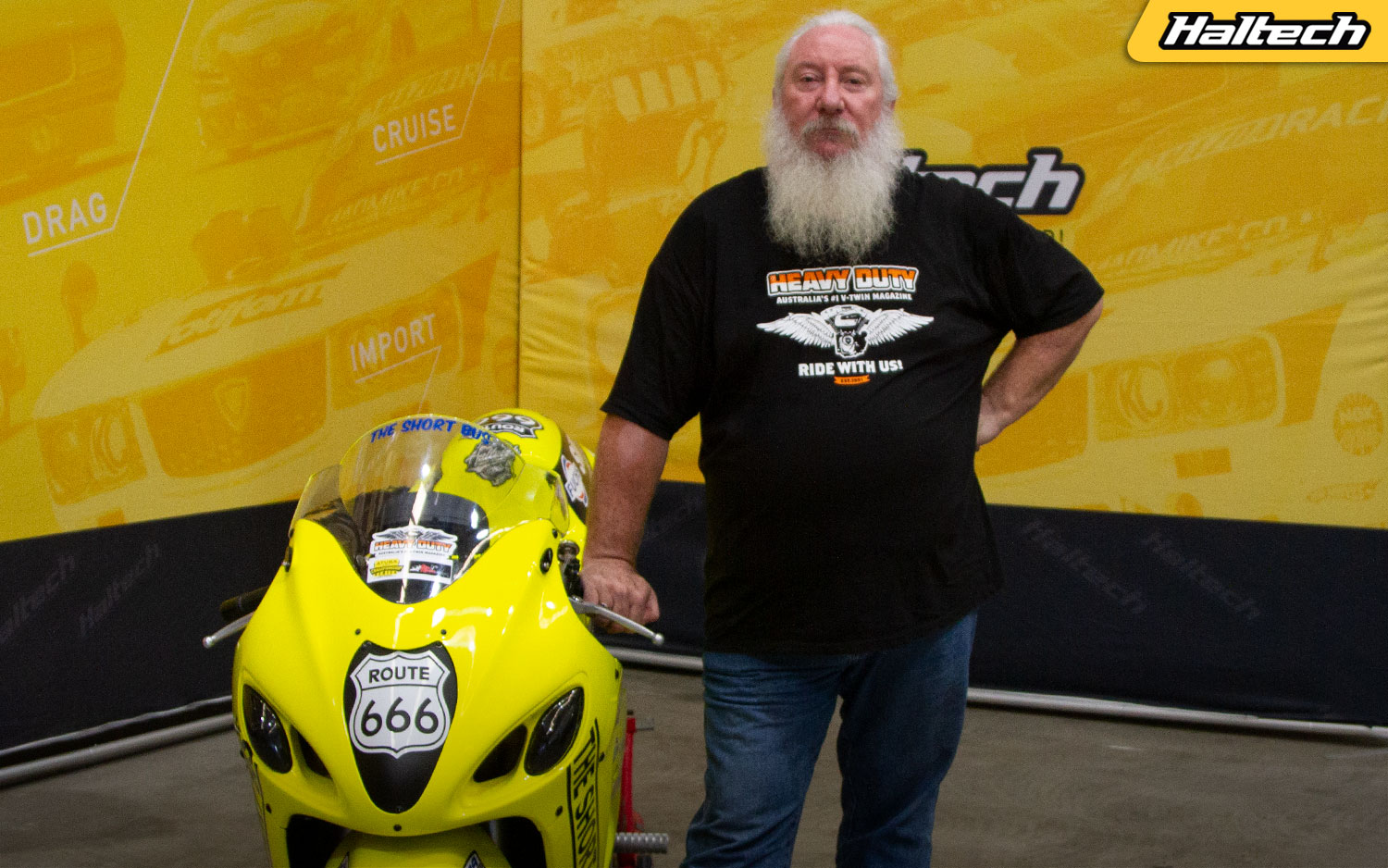
Mick is a motorbike guy through and through. In his day job he works as a riding instructor with Stay Upright teaching pre-learner riders the basics of motorcycle riding, like how not to fall off their new two-wheeled contraptions.
He is also the publisher and editor of Heavy Duty magazine, Australia’s best-selling V-Twin publication.
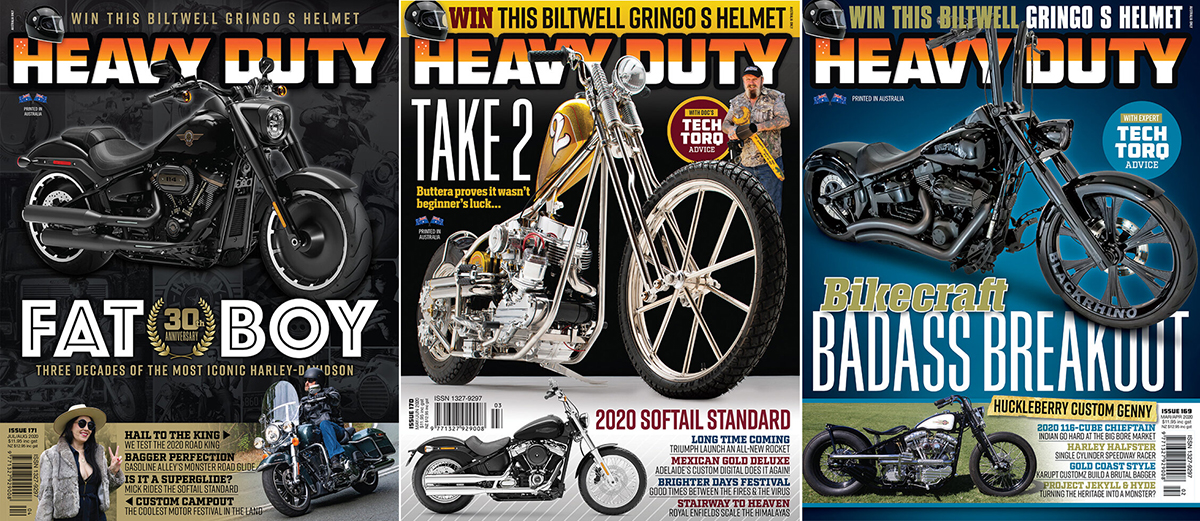
Mick’s passion for bikes began at an early age with the drag racing bug hitting soon after.
“One morning in 1972 I was enjoying a breakfast of Australia’s popular Weet Bix breakfast cereal. At that time all Weet Bix boxes came with collector cards for kids, and I was delighted when I fished out a pair of “Hottest Hot Rod” cards from the cereal box.”
This started an obsession with collecting the cards, which turned into a full-blown obsession with drag racing.
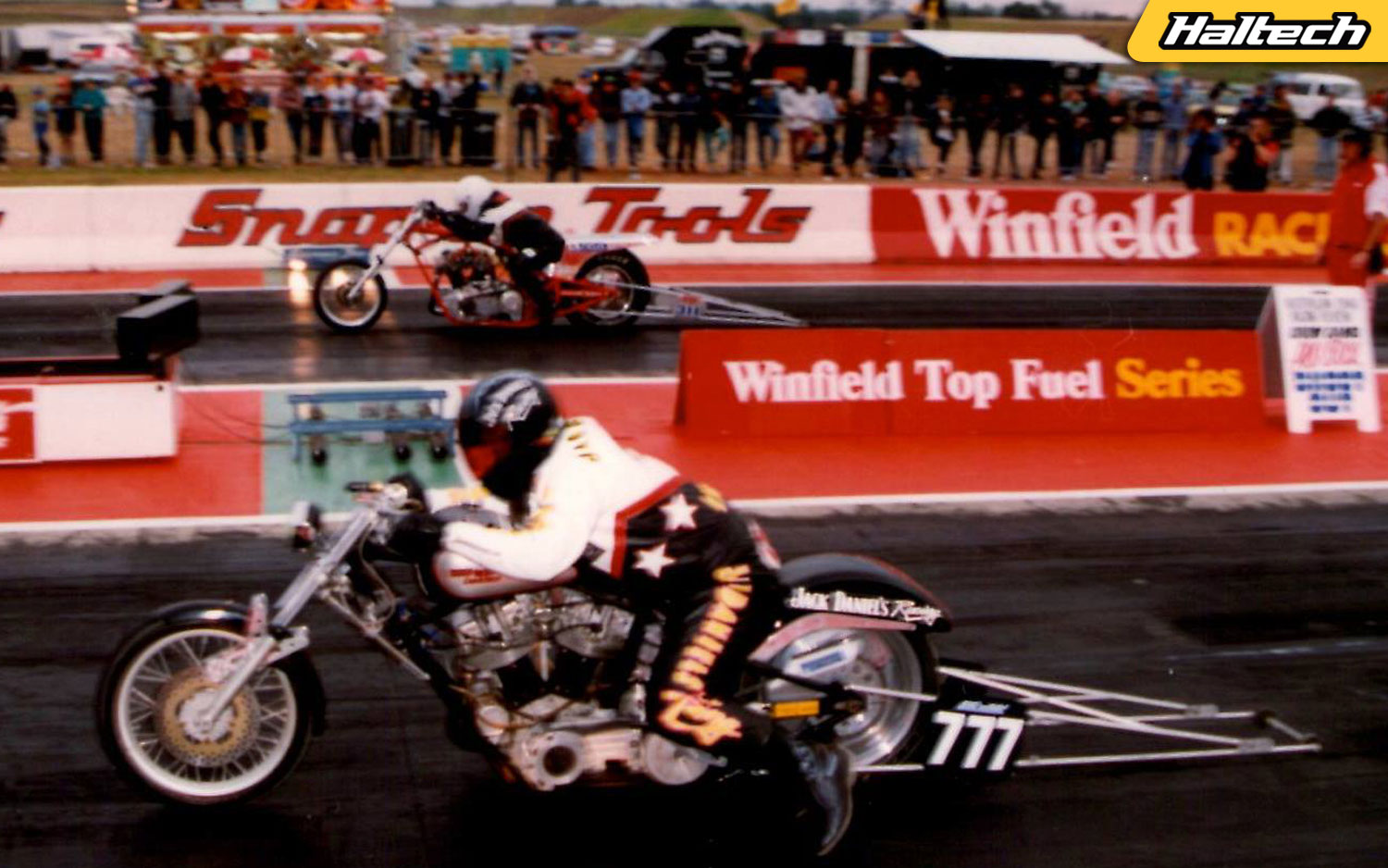
As soon as he was old enough, Mick became a track official and has been involved in the Drag Racing scene ever since. He’s been a track official, racer, IHRA Steward and Tech Inspector, commentator, sponsor, and for a time, he was even the editor of Dragster Australia Magazine.
Mick is clearly more of an old-school V-Twin kinda guy, so how did he end up owning and racing a Hayabusa?
“One of my mates put it up for sale but initially I wasn’t interested in it in any way, shape or form.”
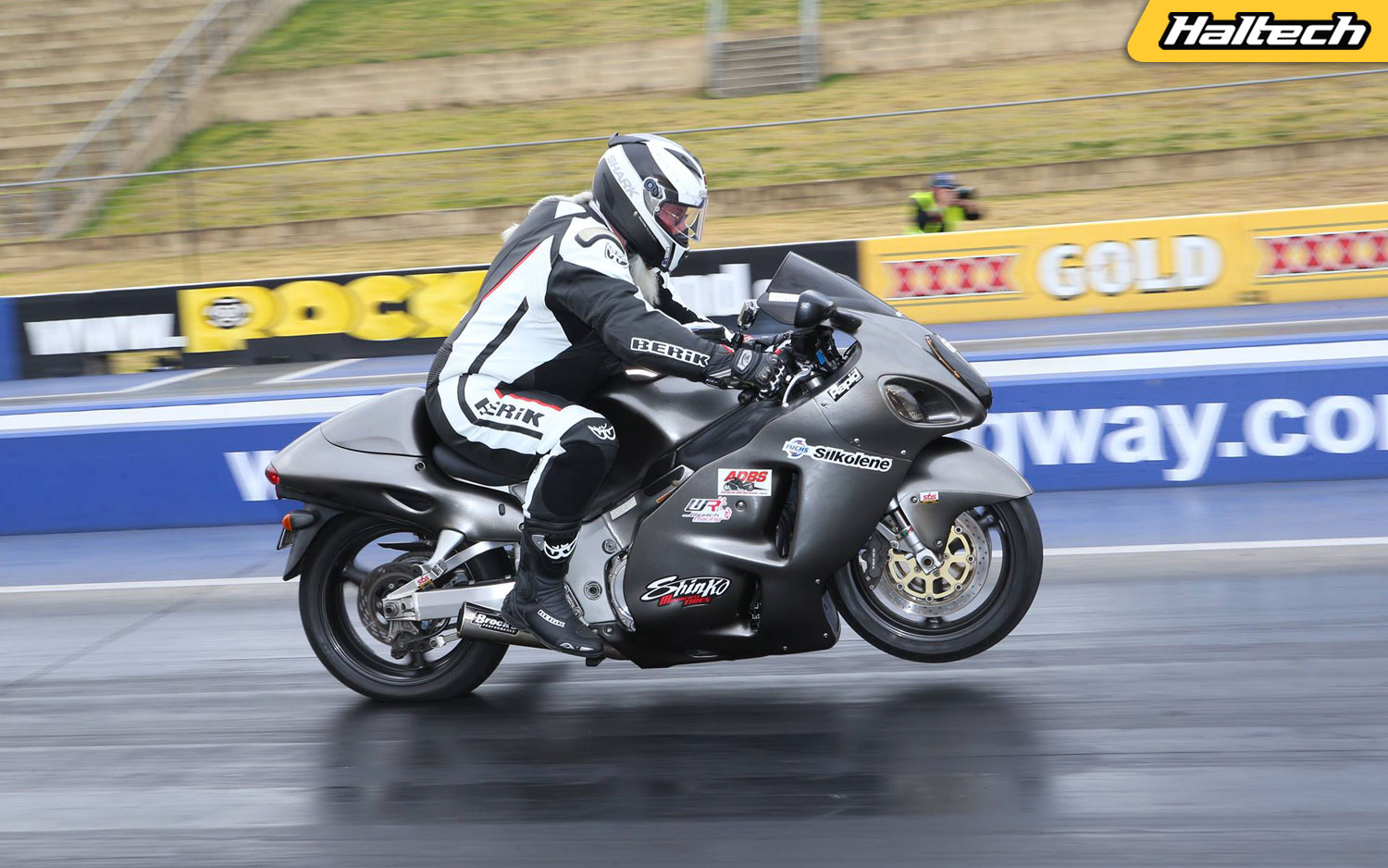
After some thought, however, Mick warmed to the idea. The Hayabusa actually made good sense; it was a late-model Japanese bike, which required very little maintenance, he could race it, park it, socialise (Mick is big on socialising) and then, of course, hop back on and race it again.
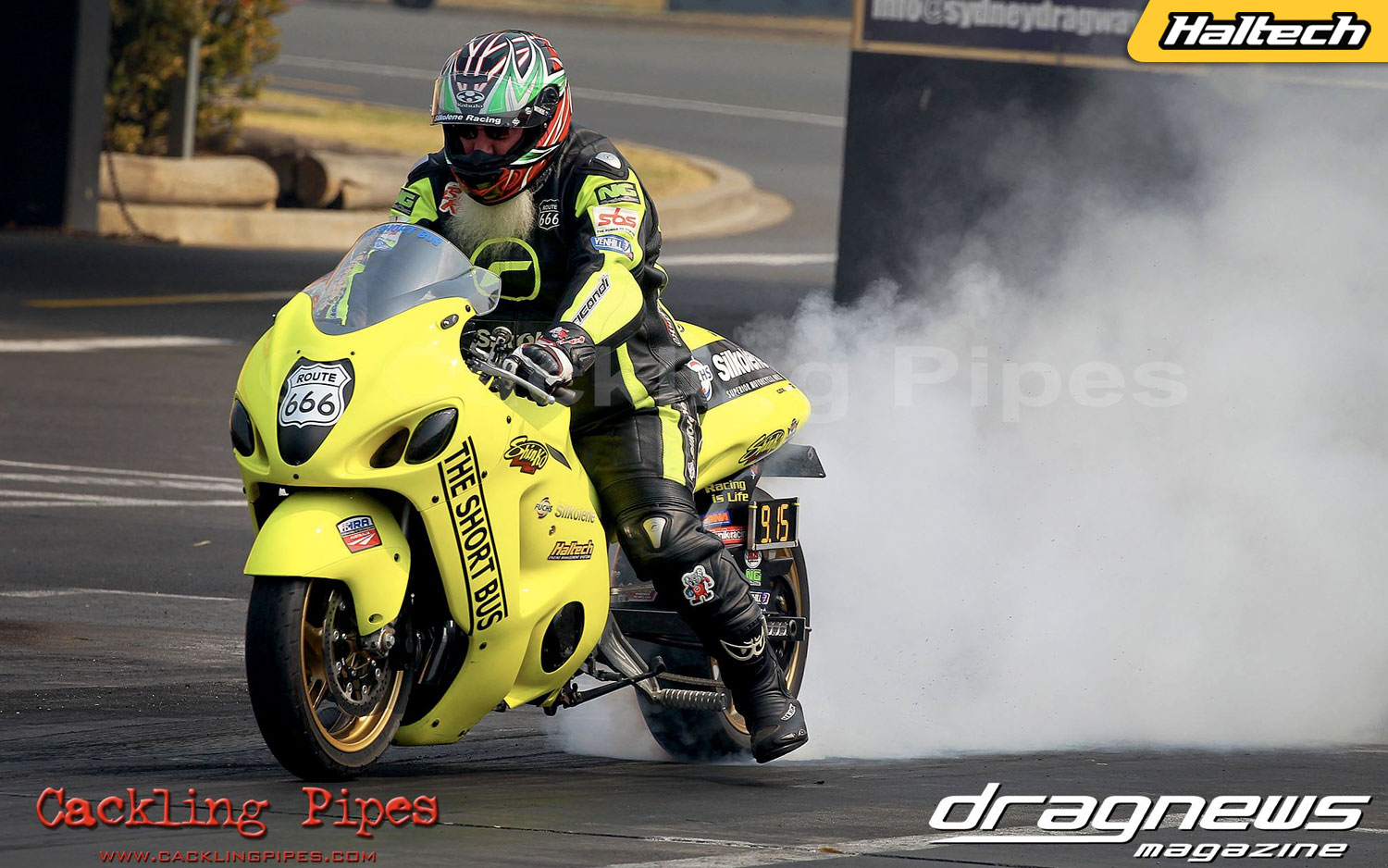
Once in Mick’s possession, the Short Bus entered a continuous modding phase.
“Every change is thought out and planned before it happens. I like to plan and then gather every single part before starting work on the next round of mods.”
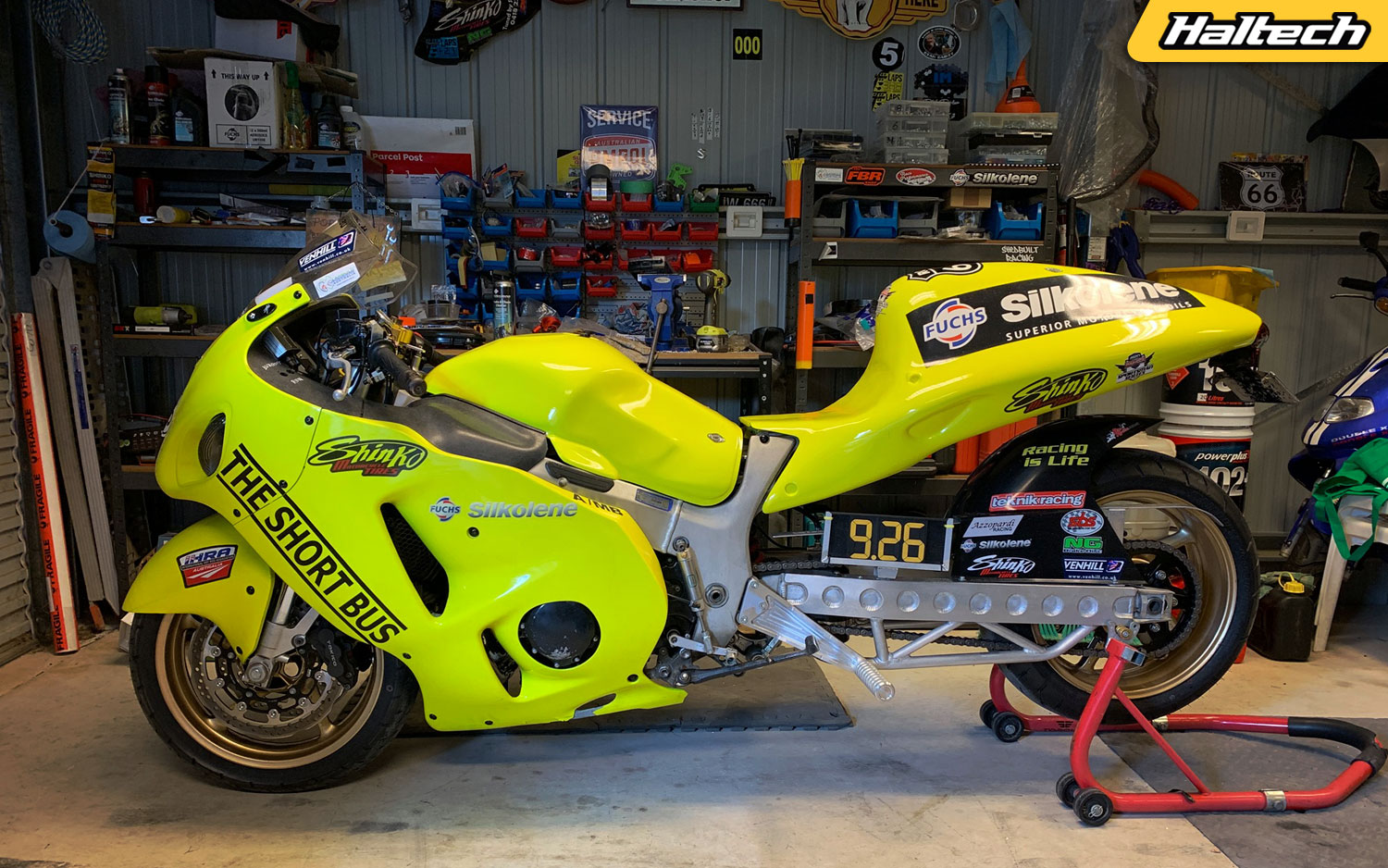
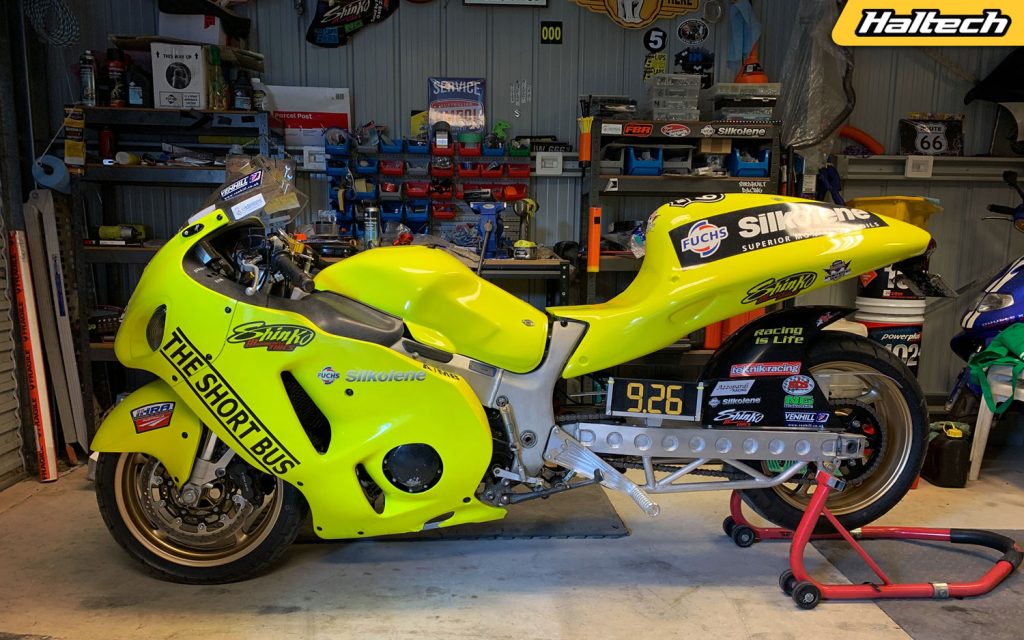
The bike itself is a 2001 Suzuki Hayabusa. The motor started out as a bog stock standard 1299cc, four-cylinder. It’s now 1441cc with a Gen 2 crank (2mm longer stroke) and 84mm pistons (3mm oversize).
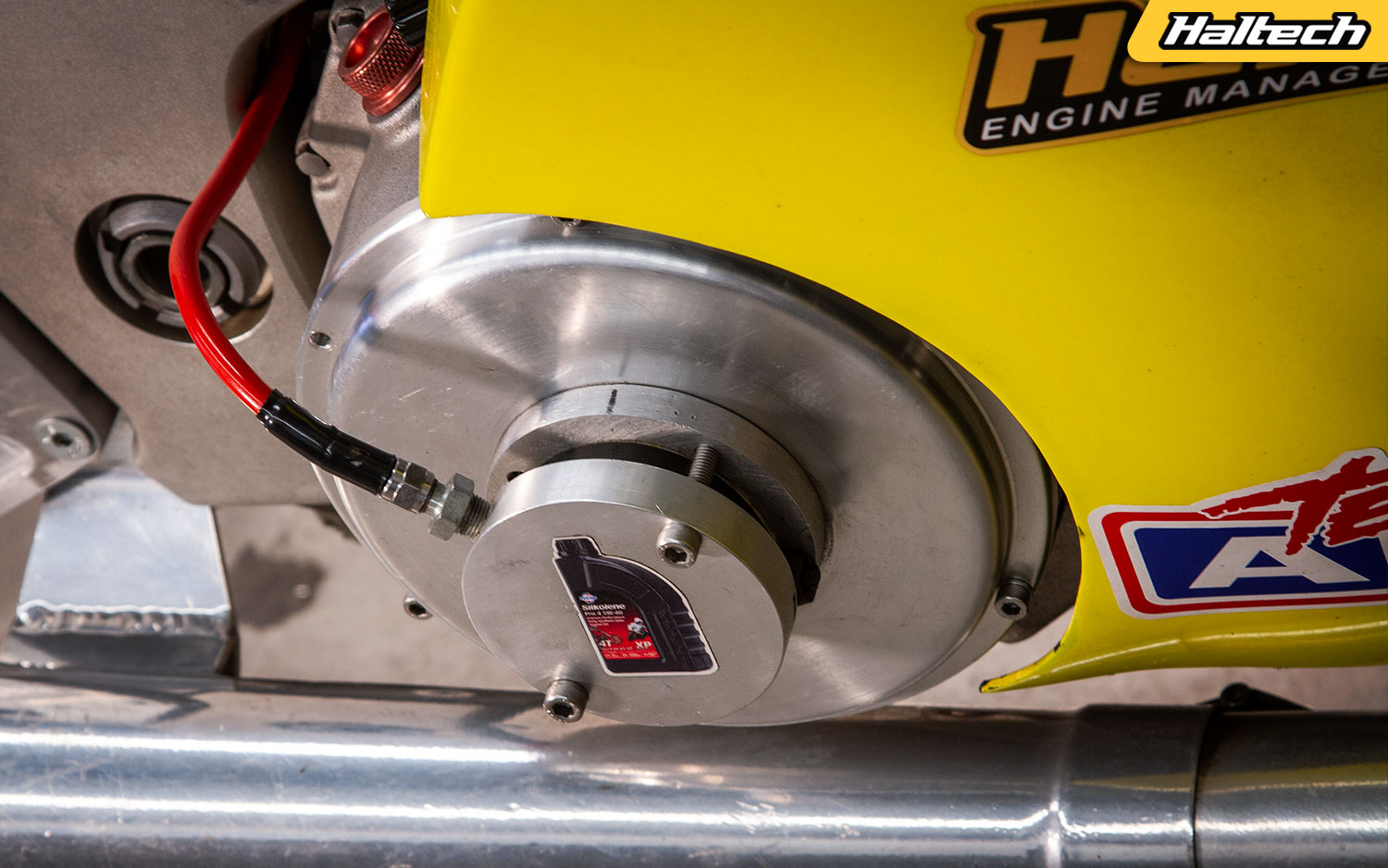
Even now there’s more power to be had by bumping the compression up but it was built to make lots of mid-range to pull Mick off the line with the slider clutch.
The cylinder head was ported from Brisbane and runs standard Gen 2 cams that were dialed in with APE adjustable timing gears.
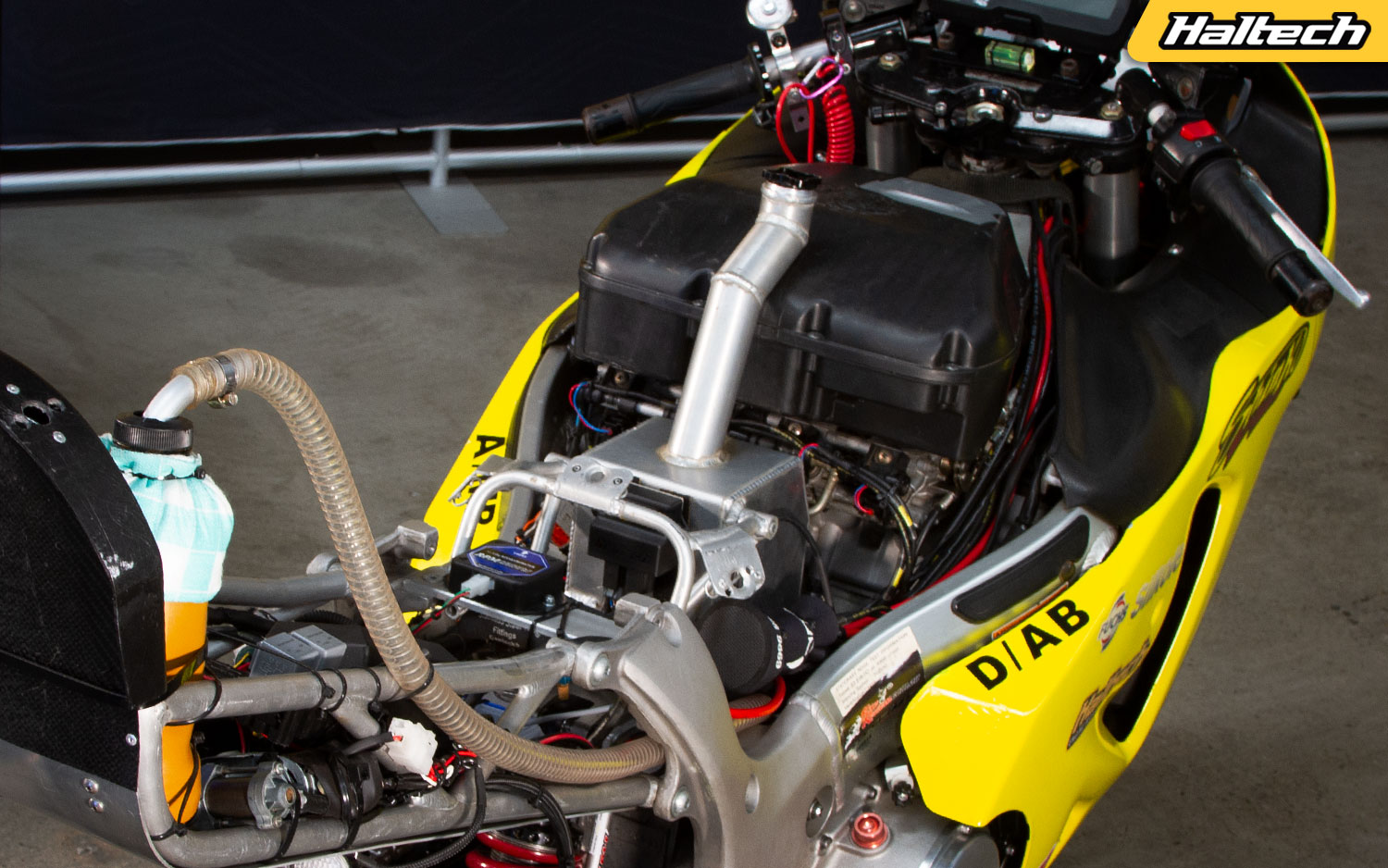
Standard throttle bodies are plenty big enough to feed this engine with clean air sucked through a DNA air filter in the Gen 2 airbox. They didn’t fit at first but Mick modified it and now it does.
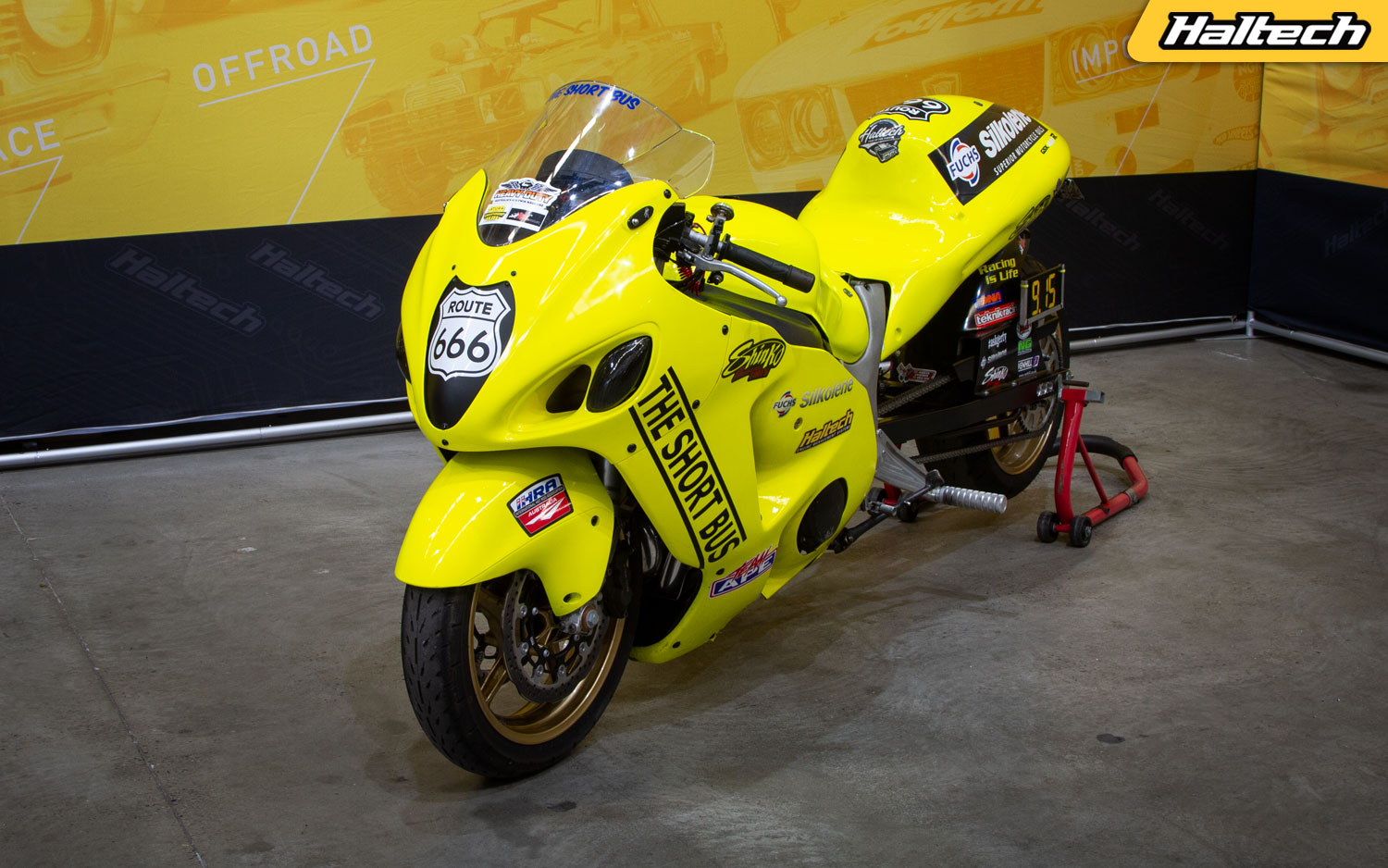
The Short Bus is running a Murray sidewinder exhaust which caused Mick a bit of trouble as it interfered with his custom-made foot pegs. Mick fixed the problem by designing new foot pegs which were millimeter perfect, however, that meant his foot was too close to the outlet which led to burned boots.
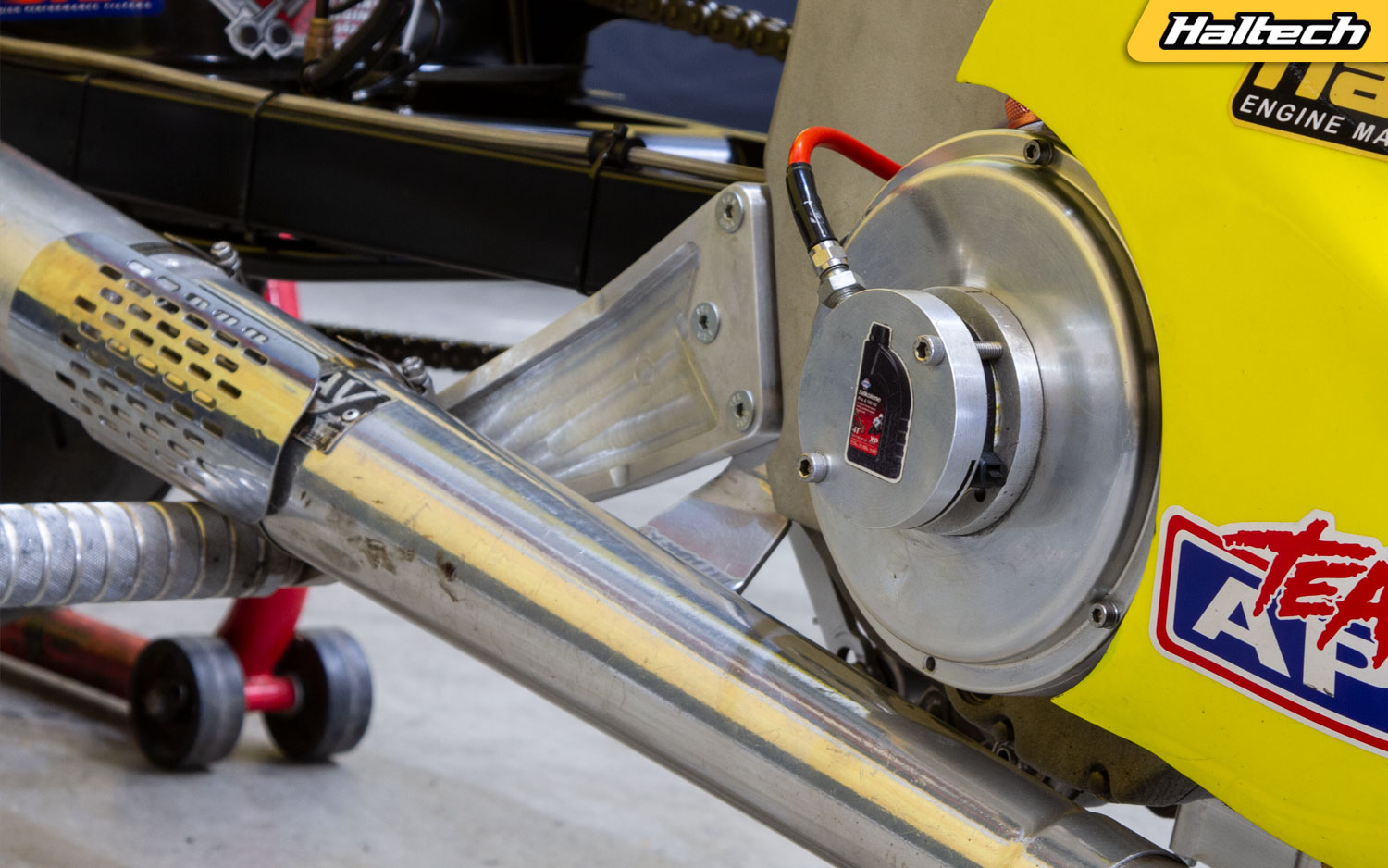
Mick experimented further and ended up just extending the exhaust with a bit of aluminum tube. Hooray, no more toasted toes.
“The Haltech Elite 1500 is my favourite single part of the setup. It really opened the door to so many options. It has a helluva lot more processing abilities than my brain. It can do the hard work while I just hang on and point the bike where it needs to go.”
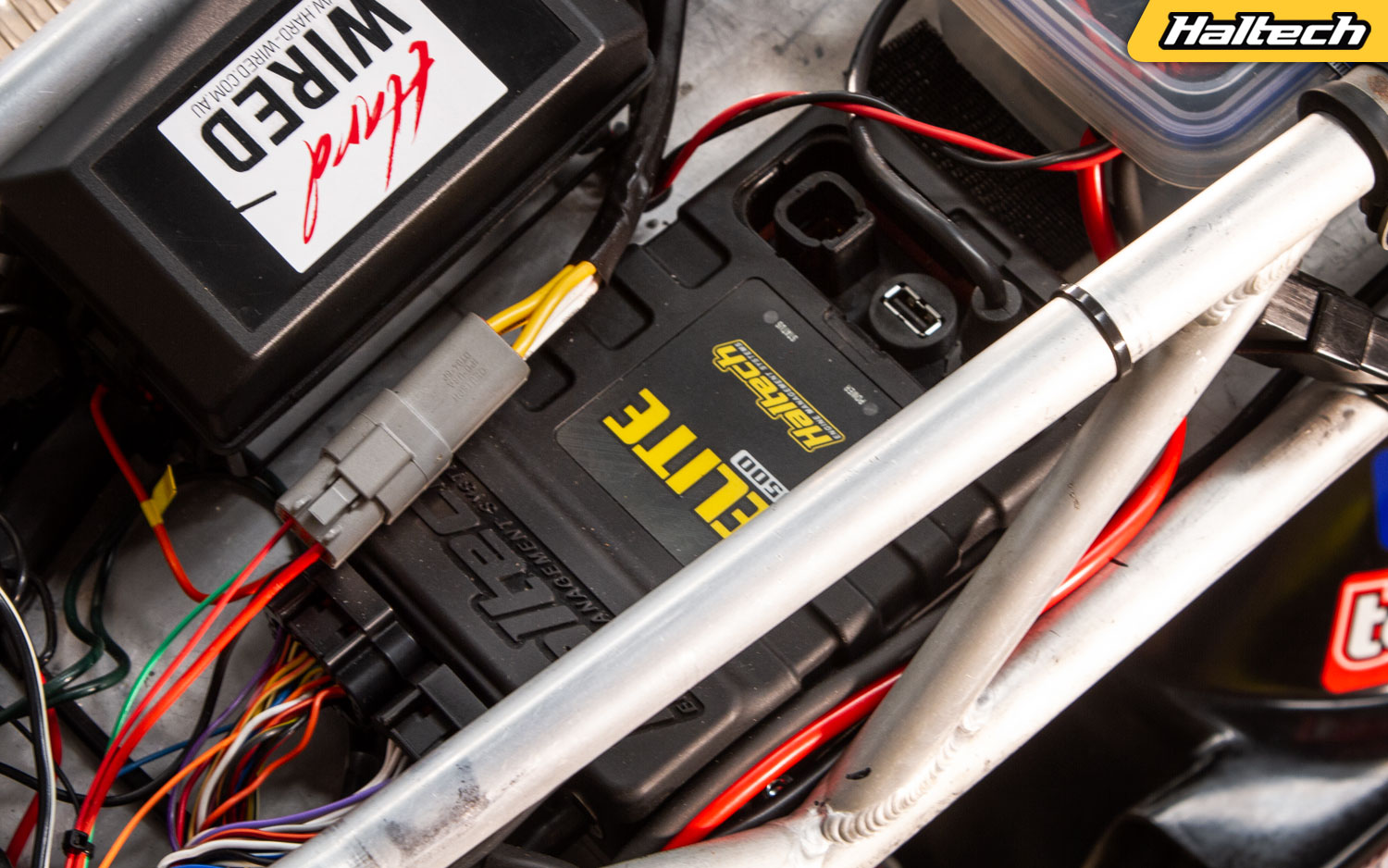
When the Haltech Elite 1500 went on, it opened up a whole new world of data-logging to Mick. He soon realised that when running his chosen fuel the injector duty cycles were up over 95%. New, high-flow injectors rectified that problem.
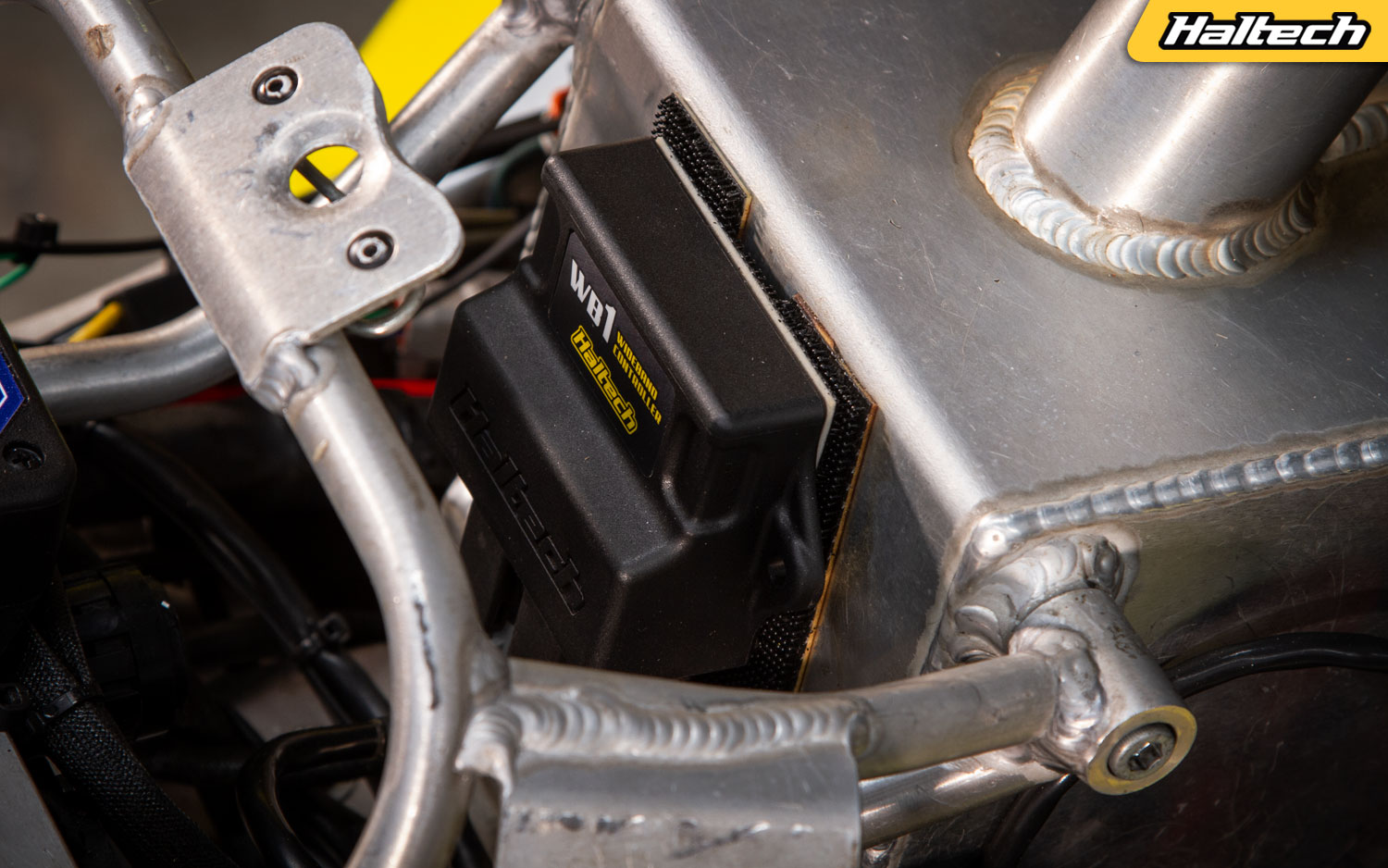
Mick also added an HPI4 high-power four-channel igniter, a WB1 single-channel CAN Wideband Controller and a pair of 150psi TI pressure sensors for fuel and oil pressure.
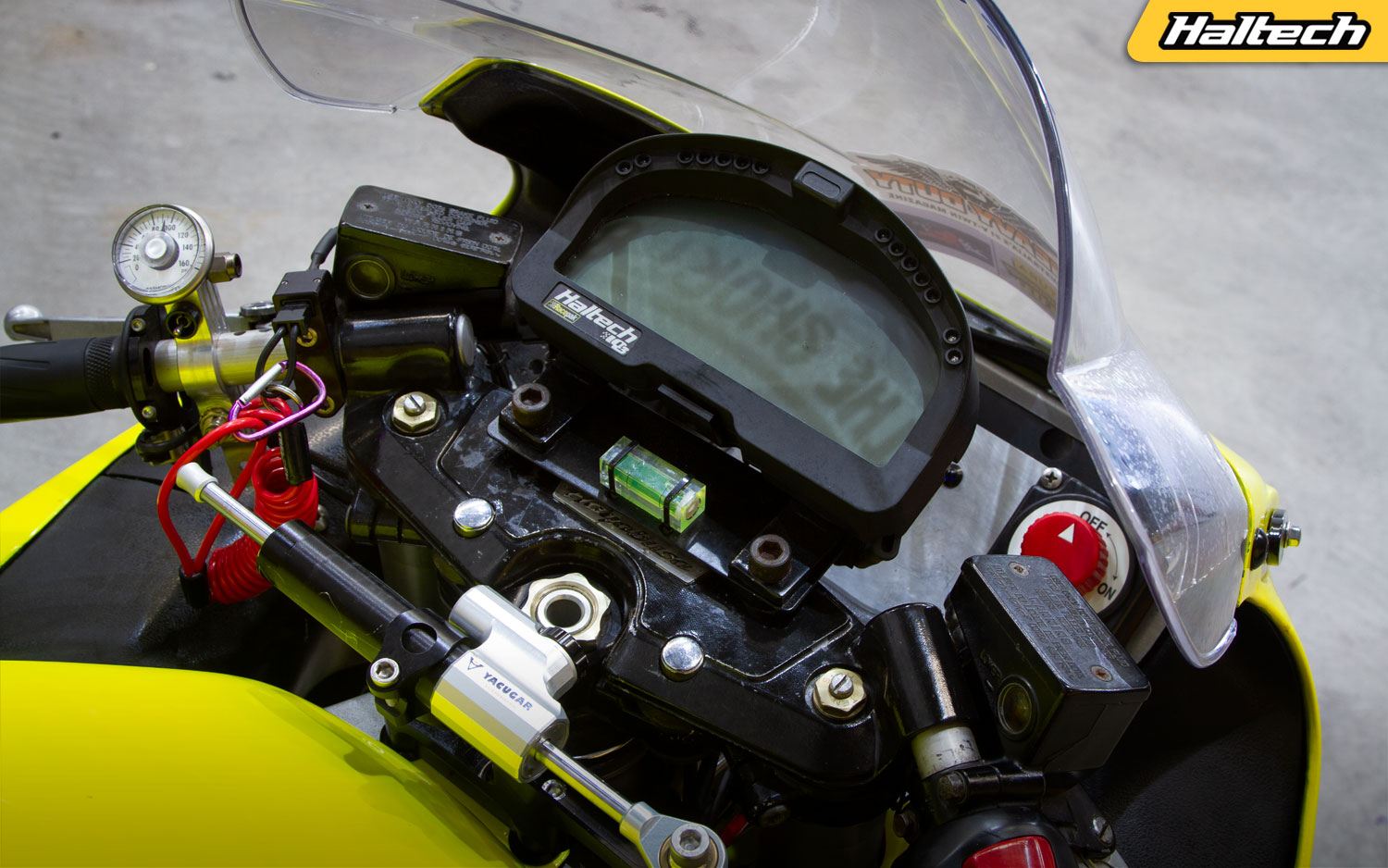
Because the aim has always been to make The Short Bus as consistent as possible, Mick takes advantage of the Elite’s built-in two-step and auto-shift features.
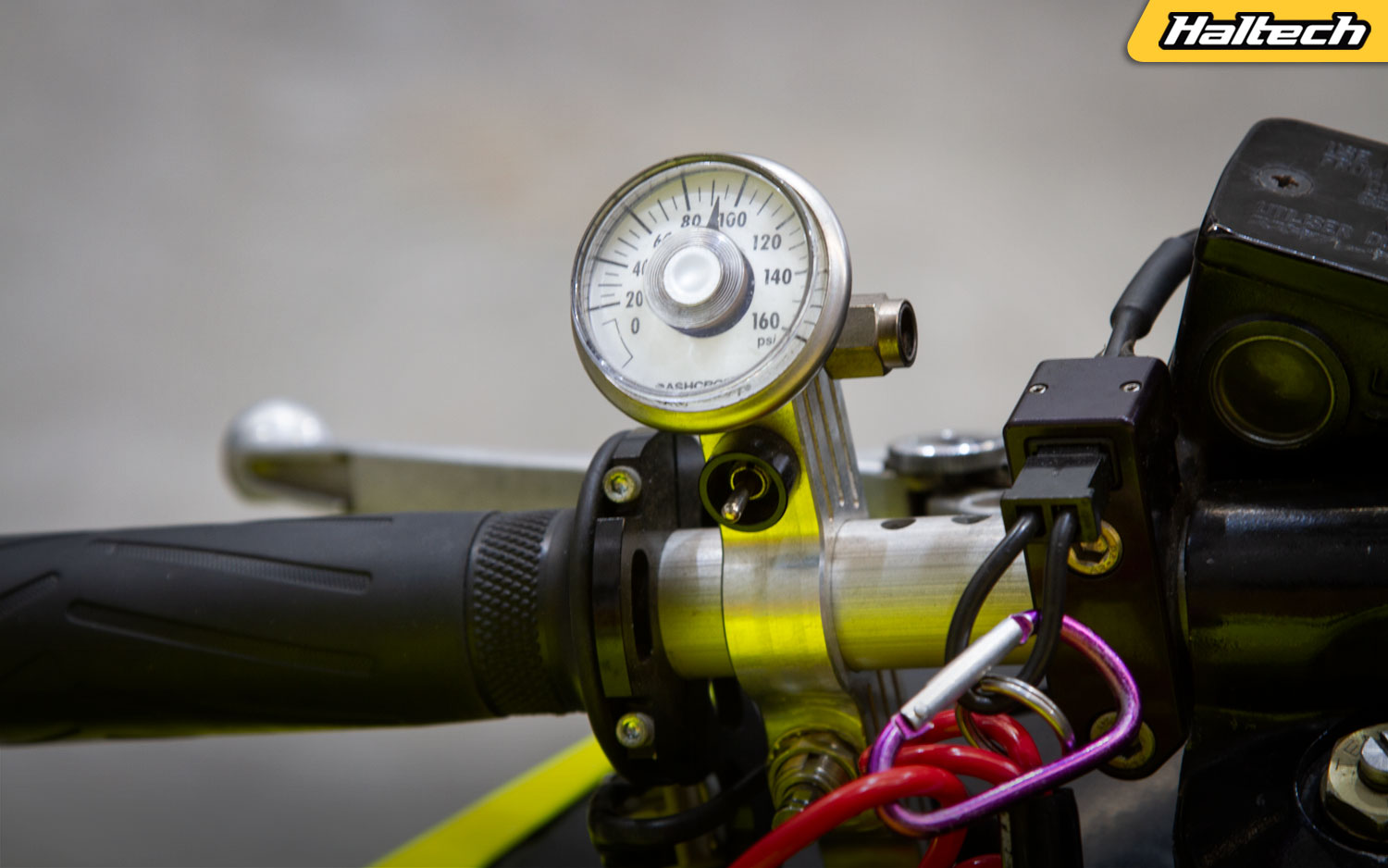
The Elite 1500 also plays a massive part during the launch, it holds the engine rpm to a rock-steady 4500rpm and Mick’s focus shifts to the end of the braking area. As soon as he releases a button, the Elite 1500 takes over and as the revs rise, the clutch starts to engage at 4900rpm he’s off down the track.
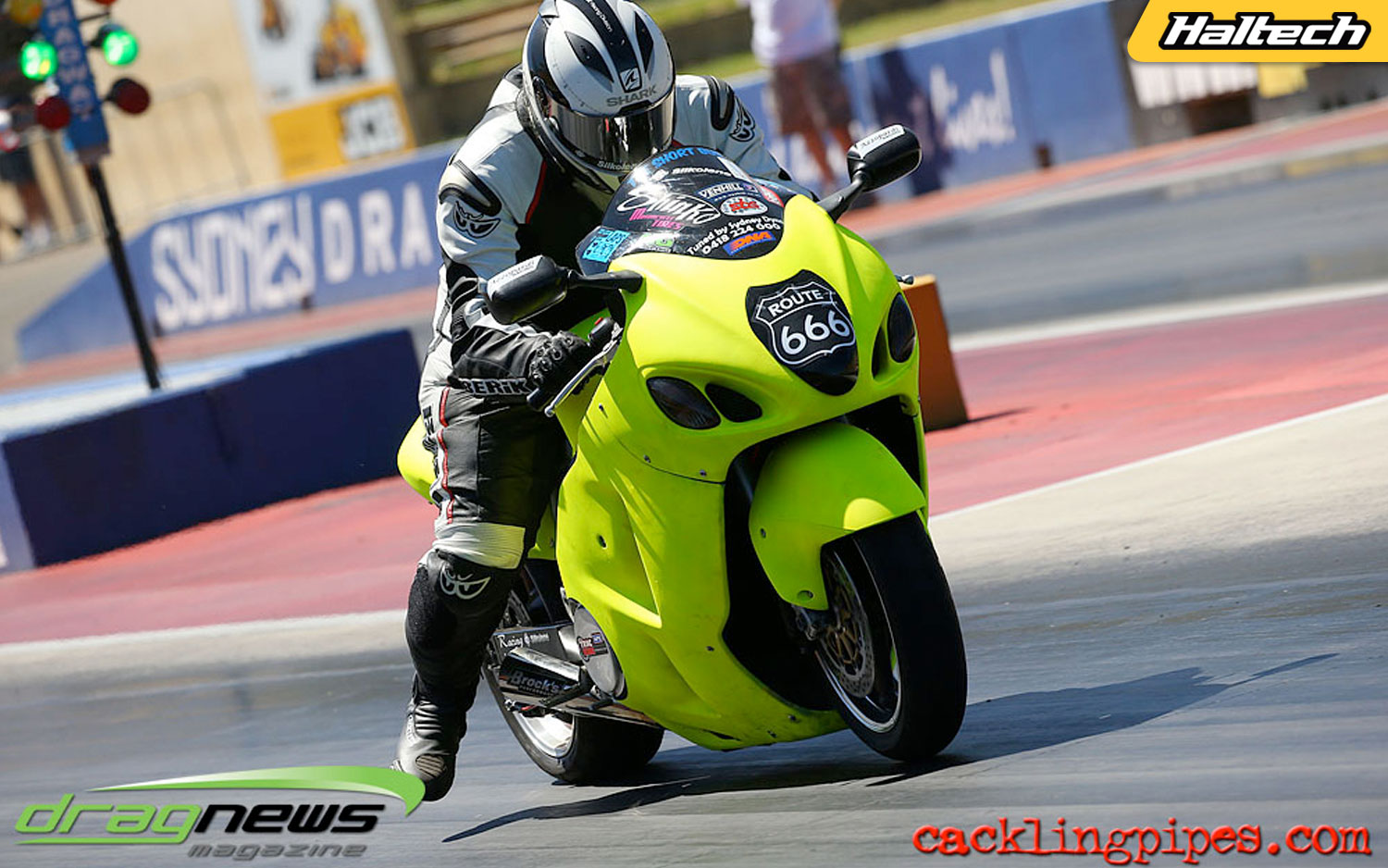
The auto shift kicks in at somewhere around 11,000 rpm. Just 2.05 seconds after leaving the start line, the shift to second is complete. The shifts to third, fourth, fifth and sixth just happen which makes it easier for Mick to fully focus on the finish line.
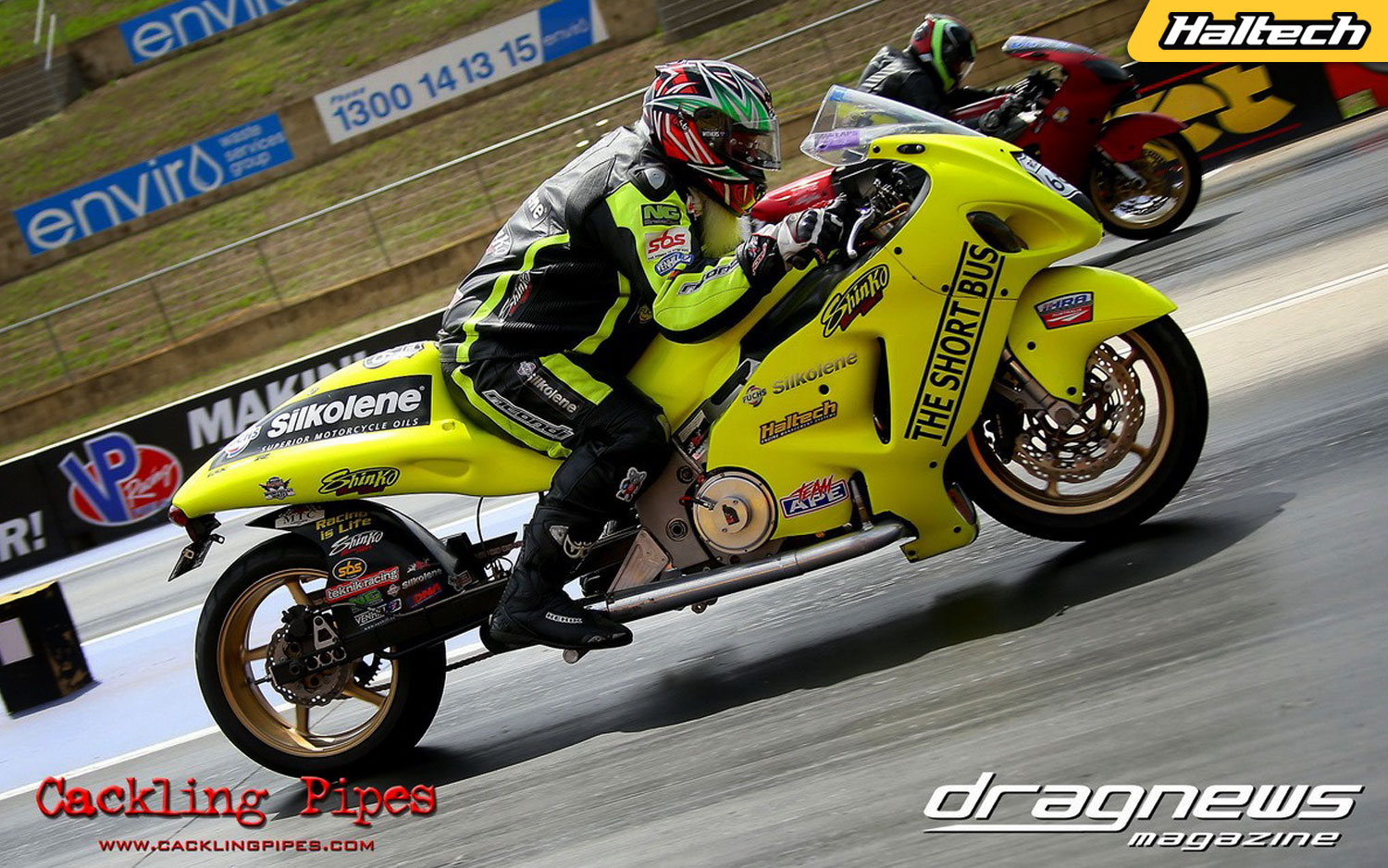
Mick’s goal is to join the 8-second club and he plans on achieving this by implementing a Nitrous setup. But before he chucks a bottle of happiness at it, Mick has a bit of work to do, toughening up The Short Bus’ motor.
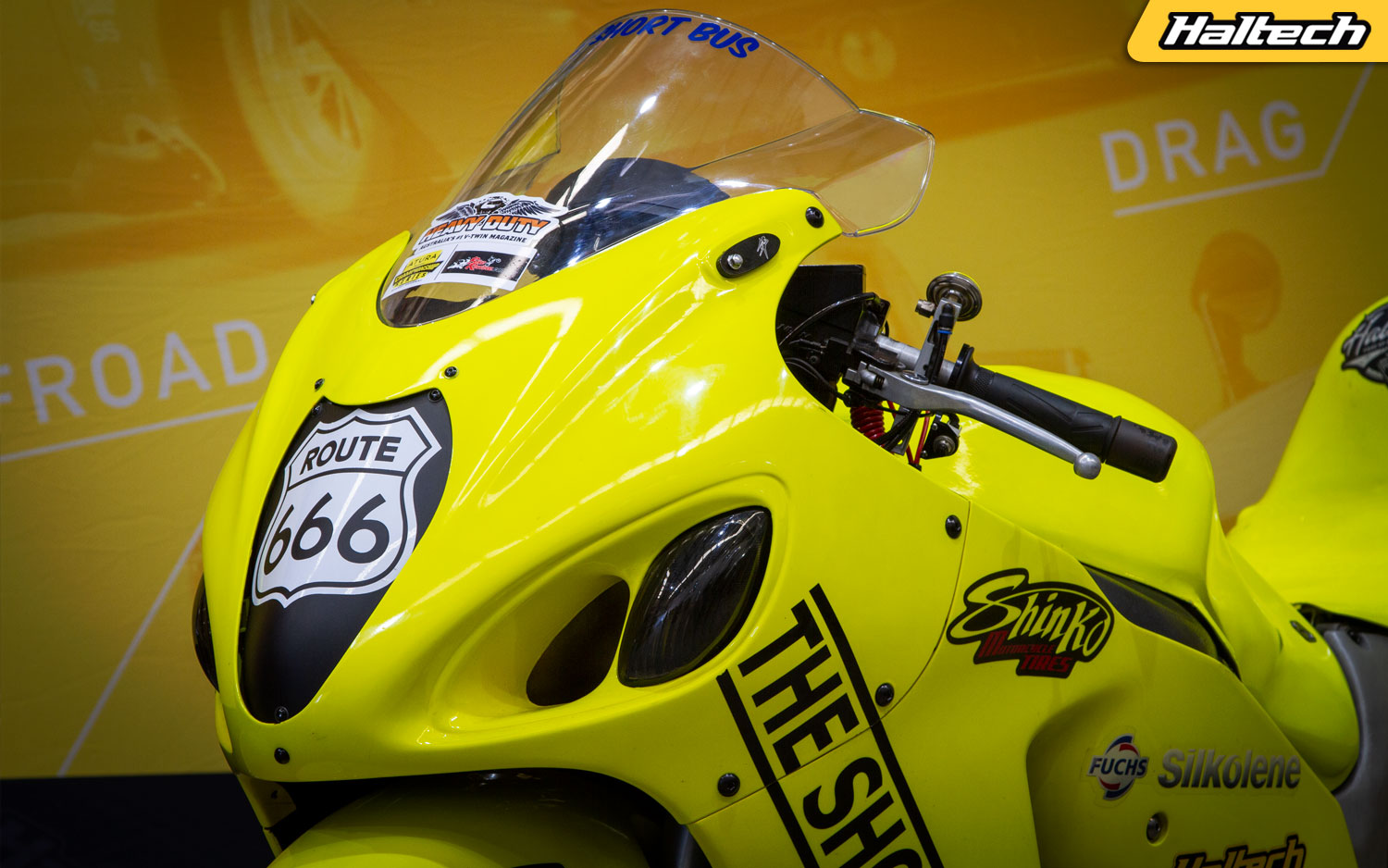
We can’t wait to see what Mick’s yellow ‘Busa can achieve with a shot (or two) of Nitrous!


 SAFE & SECURE SHOPPING